For the lining bricks of lime rotary kilns, when it comes to silicon-magnesia bricks and special phosphate bricks, special phosphate bricks are more suitable.
Because the high-temperature zone of the lime kiln lining is an oxidizing atmosphere, and the lining atmosphere is alkaline. One reason is that silicon-magnesia bricks are fired in a reducing atmosphere and are not very suitable for use in an oxidizing atmosphere. The second one is the silicon carbide added in the process ratio of silicon-magnesia bricks. Silicon carbide has high strength and wear resistance, but its drawback is that it is somewhat brittle. When used in the inner lining of lime rotary kilns, it may cause head explosion (that is, bricks fall off the working surface). In addition, due to its high thermal conductivity, the outer cylinder of the lime kiln is hot to the touch. Generally, manufacturers that use silicon-magnesia bricks usually adopt silicon-magnesia composite bricks. Silicon-magnesia composite bricks are heavy on the working surface and light on the large surface. During the firing process, if different materials are fired at the same temperature, dimensional deviations may occur. Under the same temperature, different materials At low temperatures, the heavy part of silicon carbide does not react, while at high temperatures, the light part is prone to excessive loss and the size is not ideal.
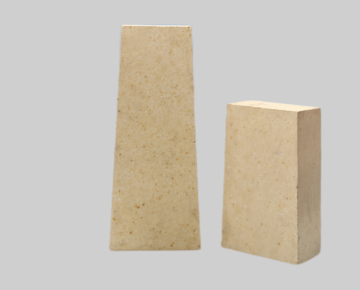
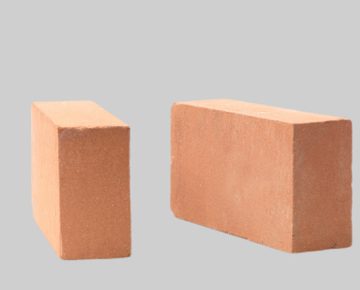
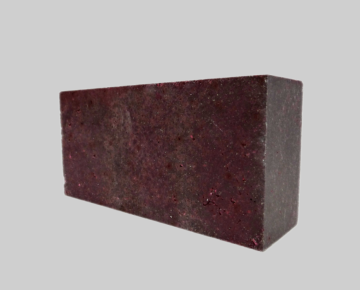
The special phosphate brick for lime rotary kiln, as a refractory brick bonded with phosphoric acid, has a stable structure, high bulk density, low porosity, and excellent compactness while maintaining low porosity. Additionally, it features large aggregate particle size, strong resistance to erosion and wear, and is less prone to dropping pieces during kiln heating and shutdown. Compared to the silicon-magnesia brick, which has a relatively high thermal conductivity and higher price, the special phosphate brick has excellent thermal shock resistance, low thermal conductivity, good alkali resistance, and most importantly, its medium-temperature strength does not decline but increases. Moreover, its price is relatively low. Therefore, considering the current usage of lime kilns and cost analysis, using the special phosphate brick with a bulk density of 2.9 is a cost-effective and mature choice for the lining.
Leave a Message
Contact Us
Email: [email protected]
TEL: +86 15238644201
A tilting furnace is a movable furnace body with a refractory lining that can operate continuously. The furnace cover and furnace nozzle of this type…
Recently, there has been a lot of buzz online about the story of natural flake graphite. Those seeking to increase their online traffic are flocking…

Submit Request
PDF Request